Signed in as:
filler@godaddy.com
Signed in as:
filler@godaddy.com
From Atlantic to Pacific, Along the Edge of Change

The Pan-Northern Passage is a 2026 sailing expedition delivering the Northern Coastal Observatory — a multi-disciplinary programme combining science, Indigenous knowledge, accountability, and education across the northern coastline via the Northwest Passage.
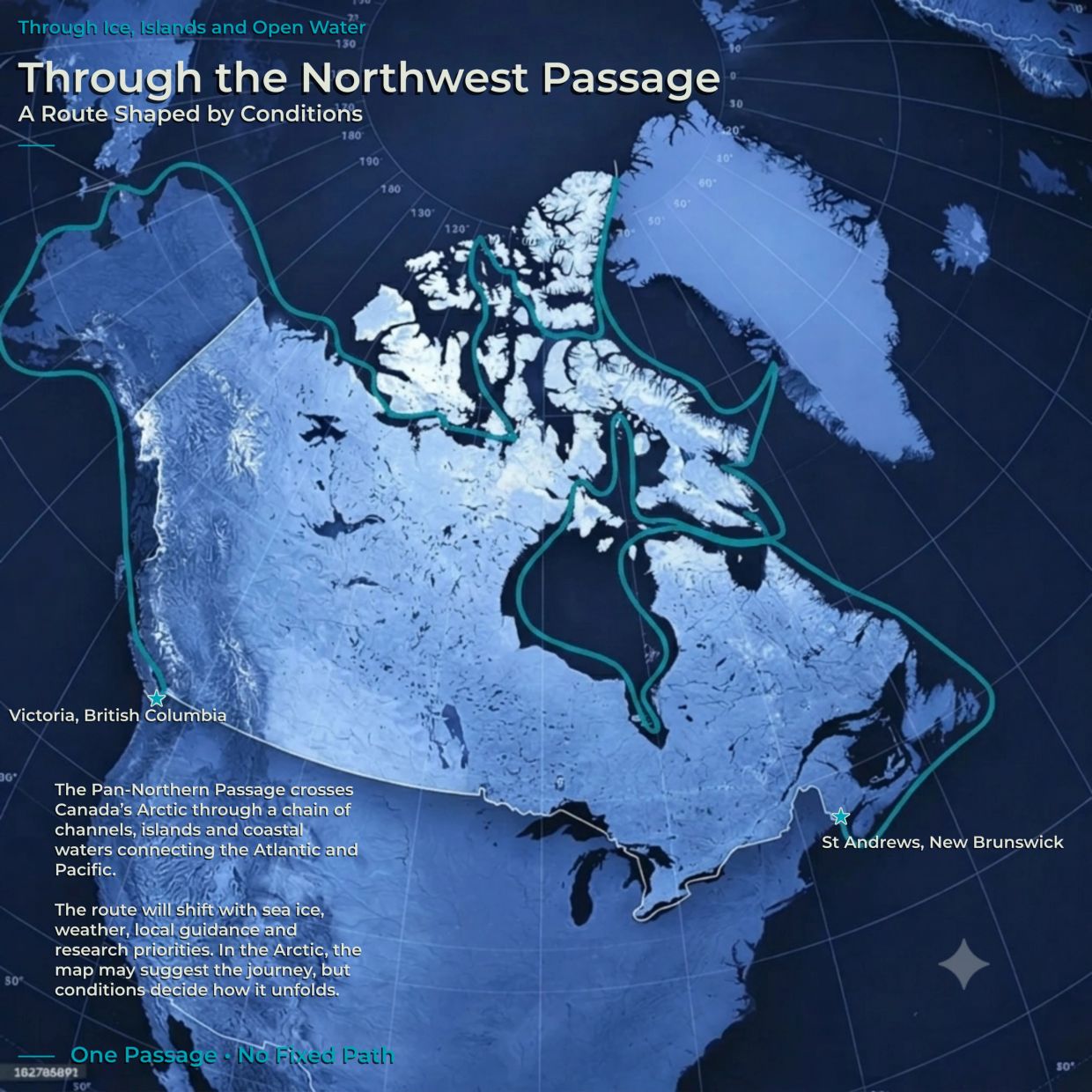
The Pan-Northern Passage is a eight-month sailing expedition tracing the full northern coastline from the Atlantic to the Pacific via the Northwest Passage, with collaborative work extending into Greenland.
More than a journey, it is a mobile research, documentation, and education platform designed to observe the northern coast as a single, interconnected system — ecological, cultural, and human — at a moment of unprecedented change.
The expedition serves as the delivery mechanism for a multi-disciplinary programme:
The Northern Coastal Observatory is an intensive, mobile research and documentation programme operating across the duration of the Pan-Northern Passage.
Structured as a shared platform rather than a single study, the Observatory enables scientific research, Indigenous collaboration, environmental accountability, and education to operate in parallel while remaining operationally independent.
This structure allows partners and donors to support:
without compromising scientific integrity or editorial independence.
The Northern Coastal Observatory is designed for repetition, not as a one-time expedition.
The Pan-Northern Passage establishes a comprehensive baseline across the northern coastline. That baseline is intended to be revisited on a 3–5 year cycle, enabling meaningful comparison over time as environmental, climatic, and human conditions continue to change.
Repeat observation cycles allow for:
Each cycle operates as an independent project while contributing to a growing longitudinal record. Future iterations are contingent on partnerships, conditions, and community collaboration, ensuring the programme remains adaptive, ethical, and responsive.
Focus
Context
Large portions of the northern coastline remain under-documented, particularly in near-shore and transitional ice environments. Early-career researchers often lack access to platforms capable of sustained, coast-spanning fieldwork.
Activities
Outputs
Public Benefit
Focus
Context
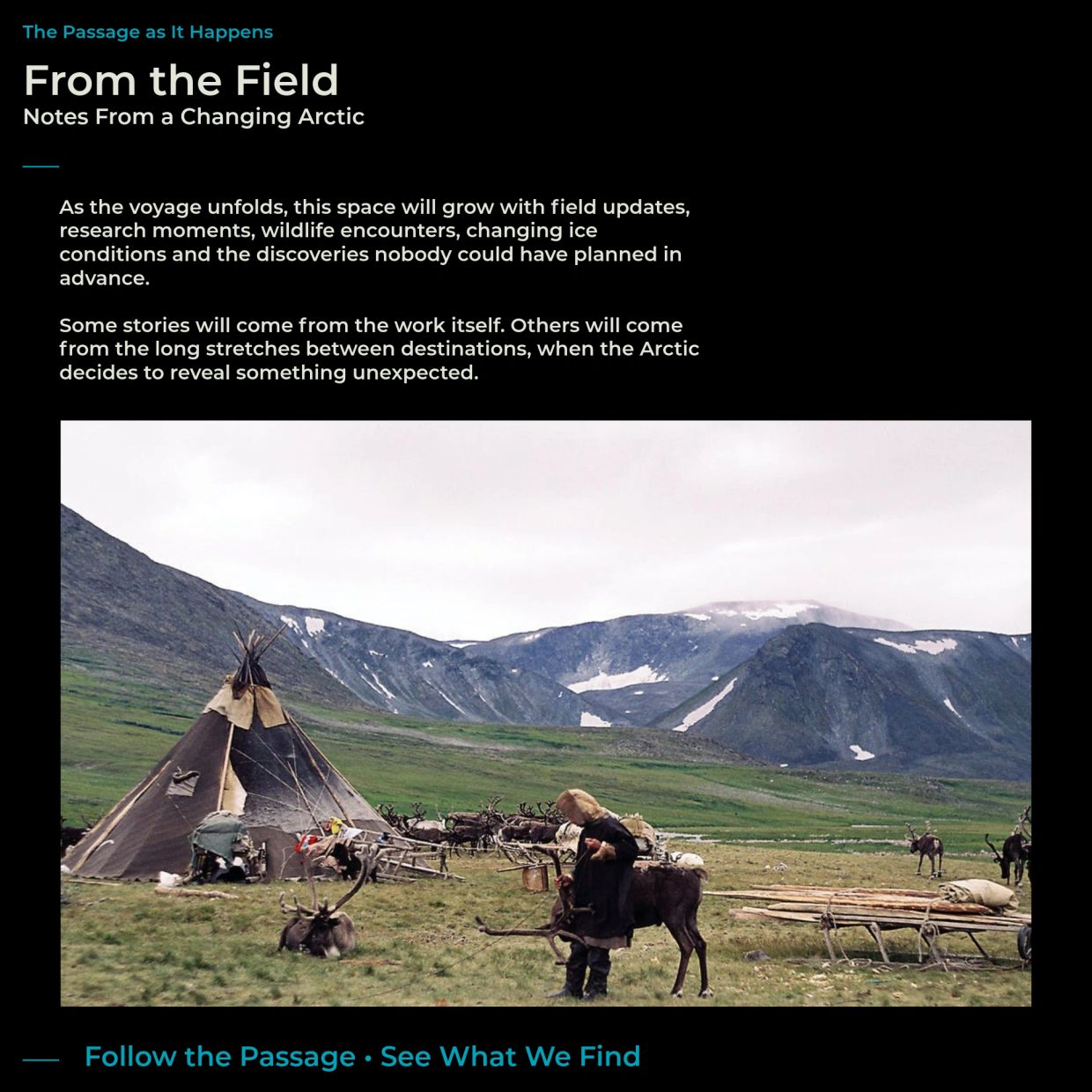
In northern regions, climate change is experienced first through daily life: altered travel routes, shifting species behaviour, changing ice conditions, and impacts on food security and cultural practices.
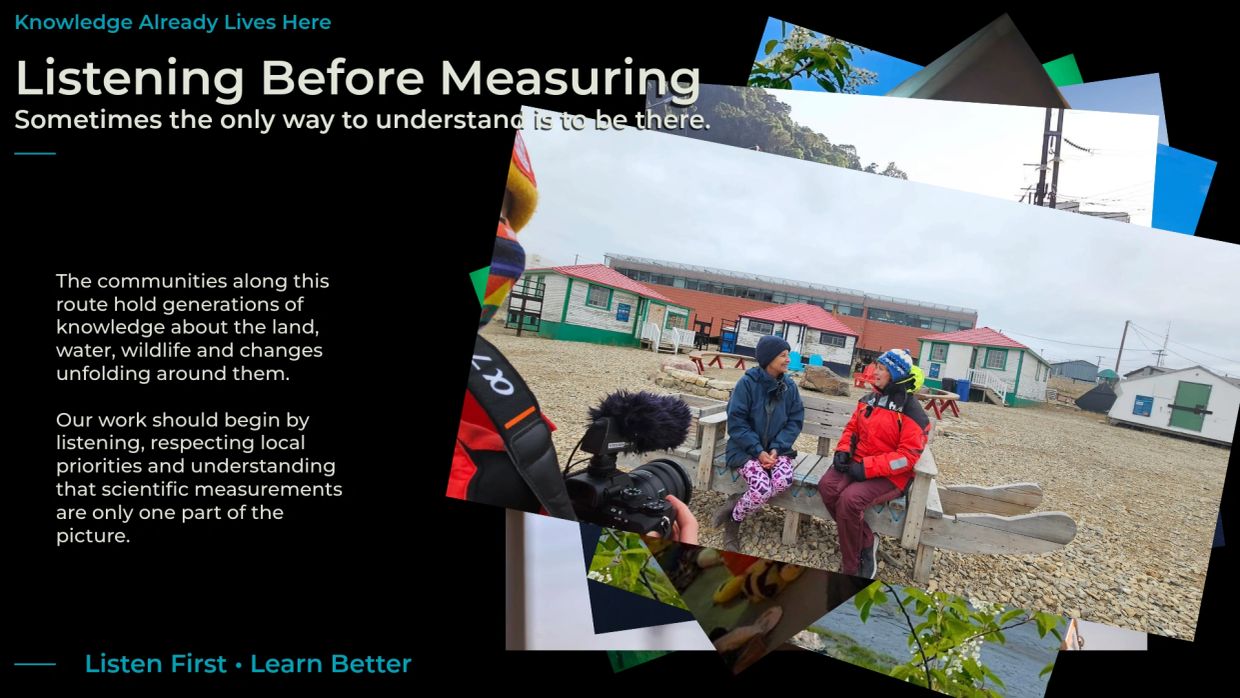
Audax Ventus works with communities, not about them, documenting climate realities through respectful collaboration.
Activities
Outputs
Public Benefit
Focus
Context
Remote northern waters often experience reduced oversight, creating conditions where environmental harm can go undocumented or unresolved.
RQS operates quietly and independently, prioritising evidence over advocacy theatre.
Activities
Outputs
Public Benefit
Focus
Context
Most people will never experience these coastlines firsthand. Education ensures that the benefits of field research extend beyond the vessel and expedition window.
Activities
Outputs
Public Benefit
Across all divisions, the Pan-Northern Passage includes continuous, professional documentation of research, collaboration, and life aboard.
This documentation is not promotional in nature. It exists to ensure transparency, translate complex work for diverse audiences, and extend public benefit.
Documentation outputs include:
Immersive VR assets bring real marine environments into spaces where direct access is impossible, supporting curiosity, well-being, and connection to the natural world.
All work conducted under the Pan-Northern Passage and Northern Coastal Observatory is independent.
Financial support enables operations and access. It does not provide:
Research outcomes — including uncomfortable or unexpected findings — are published transparently and responsibly.
The northern coast is not a collection of isolated places. It is a connected system — ocean, ice, land, wildlife, and people — undergoing rapid transformation.
Understanding that change requires more than a single moment in time. It requires longitudinal observation, ethical collaboration, and accountability.
The Pan-Northern Passage exists to observe, document, and understand this system as it is changing, while ensuring the knowledge generated is shared, independent, and accessible.
The Pan-Northern Passage is a 2026 sailing expedition delivering the Northern Coastal Observatory — a multi-disciplinary, repeatable programme combining science, Indigenous knowledge, accountability, education, and public documentation across the northern coastline via the Northwest Passage.
Duration
May–December 2026
(recurring on a 3–5 year cycle)
Route
Atlantic → Arctic → Pacific
(via the Northwest Passage)
Scope
One continuous northern coastline
Three oceans
Multiple regions and communities
Programme
The Northern Coastal Observatory
Disciplines
• Marine biodiversity (eDNA & genetics)
• Ice systems observation
• Indigenous knowledge & anthropology
• Megafauna climate studies
• Environmental accountability
• Education & public outreach
Design
Repeatable on a 3–5 year cycle for longitudinal comparison
Platform
Sailing research vessel
Low-impact, mobile, adaptive
Outputs
• Scientific data and technical reports
• Educational media (K–12)
• Long-form documentary and episodic series
• Immersive VR for hospitals and education settings
The northern coast is changing faster than most places on Earth.
Ice, ecosystems, and human communities are responding in real time — often before policy, science, or public awareness can catch up.
Understanding these changes requires:
The Pan-Northern Passage exists to meet that moment — quietly, rigorously, and independently.
This is not a tourism voyage.
It is not a media stunt.
It is not a single-study expedition.
The Pan-Northern Passage is:
The journey enables the work — it is not the work itself.
The Pan-Northern Passage is not a commercial voyage and not open to casual participation.
Crew and onboard contributors are selected based on:
Opportunities may include:
All roles are application-based and subject to availability, timing, and project needs.
Learn more about current and upcoming opportunities:

Support the vessel acquisition and outfitting with a single contribution.

Keep operations ready and independent research sustained over time.

Contribute infrastructure resources, equipment, or aligned field tools.
Expedition Audacity Research Foundation